Insurance

Telematics programs that improve the loss ratio, not just the marketing.

Many usage-based insurance launches end up as a discount app with low take-up and no effect on claims. We help insurers design, launch or repair programs that change pricing, driver behaviour and claims handling in ways the actuarial team can measure.

Discuss your program

Who we work with

  • Motor insurers and MGAs
  • Fleet and commercial vehicle insurers
  • Home and commercial property insurers
  • Bancassurance and embedded insurance teams
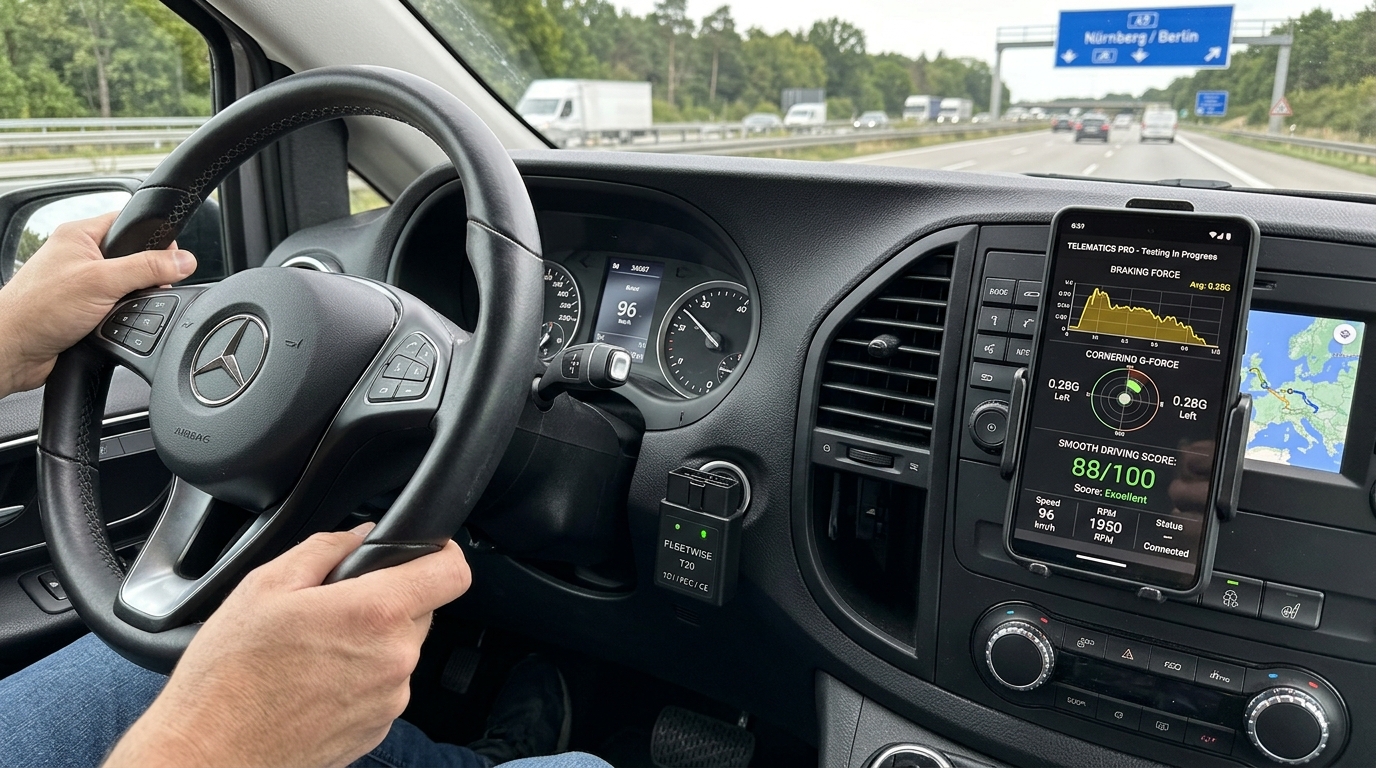
Fleet vehicle cockpit showing connected OBD-II telematics device and driver risk scoring smartphone interface
Connected Vehicle & Claims Telematics Evaluation of smartphone sensor SDKs, OBD-II dongles, and crash detection algorithms. We calibrate driving scores (braking dynamics, cornering g-force, speeding) against claims frequency and loss ratios.
Common problems

What insurers bring to us

If one of these sounds familiar, the answer below is where we would start.

Pricing

“Our telematics pilot collects data, but the loss ratio hasn't moved.”

This is the most common situation we see. Usually the data never reaches pricing: the driving score lives in the vendor's portal, the discount is flat, and nobody has linked trips to claims.

The fix is rarely a new vendor. It is connecting telematics data to policy and claims records, checking which score components actually predict claims in your portfolio, and redesigning the reward so that good drivers are retained and risky ones are priced correctly.

What we do

  • Audit the data flow from device to rating engine
  • Link trip data to claims and test which variables predict loss
  • Redesign discount and renewal mechanics with the actuarial team
Technology

“Smartphone app, OBD dongle or black box: which should we use?”

It depends on your segment, distribution and budget per policy. Smartphone apps cost the least and reach customers fastest, but depend on the driver carrying the phone and keeping the app installed. Installed hardware gives cleaner, tamper-resistant data and suits fleets and young drivers, at a much higher cost per vehicle.

Many programs combine them: an app for engagement and a low-cost tag or connected-car data feed to confirm which vehicle a trip belongs to. The comparison below sets out the trade-offs.

What we do

  • Model cost per policy and data quality for each option
  • Run a vendor-neutral tender with scoring against your requirements
  • Define pilot success criteria before anything is signed
Customers

“Drivers stop using the app after a few months.”

Engagement drops when the app only reports a score. Drivers keep using it when feedback is specific (this junction, this braking event), rewards arrive quickly, and the score clearly affects what they pay.

Retention also improves when the app does something useful beyond scoring, such as trip logs for business mileage, crash assistance, or parking and service reminders.

What we do

  • Analyse where in the customer journey users drop off
  • Design feedback, challenges and reward schedules
  • Set up engagement metrics linked to retention and claims
Claims

“Claims are reported late, and we suspect some are staged.”

Telematics can detect a collision from accelerometer data within seconds, record its location, time and impact direction, and open a first notice of loss (FNOL) automatically. Earlier notification shortens the claim cycle and reduces costs that grow with delay, such as vehicle storage, hire cars and injury claims.

The same data helps claims handlers spot inconsistencies: an impact that doesn't match the reported damage, a vehicle that wasn't moving, or a location that doesn't fit the story.

What we do

  • Specify crash detection thresholds and false-alarm handling
  • Integrate automated FNOL with claims and assistance providers
  • Define fraud indicators that claims teams can act on
Compliance

“Legal is worried about GDPR and location data.”

Their concern is justified, and it is solvable. Telematics programs in the EU run successfully with a clear legal basis, a data protection impact assessment, and an architecture that keeps only what pricing and claims need.

Privacy decisions also shape the technology: whether raw GPS traces are stored at all, where data is processed, and what the vendor may reuse. Settling them early avoids re-engineering later.

What we do

  • Map data flows and retention for the DPIA
  • Write data-handling requirements into vendor contracts
  • Design consent and transparency screens with your legal team
Property lines

“Can sensors reduce water damage claims on our home and commercial policies?”

Yes. Water escape is one of the most frequent property claims, and its cost depends mostly on how long a leak runs before someone notices. Leak sensors with automatic shut-off valves cut that time from hours or days to minutes.

The hard part is commercial, not technical: who pays for devices and installation, how to reach the policyholders where the risk is highest, and how to reflect the reduced risk in premium. See our property page for the building side.

What we do

  • Build the business case by segment and claim history
  • Select devices and installation partners
  • Design the alert, response and premium mechanics
Reference

Traditional motor insurance vs PAYD vs PHYD

Usage-based insurance (UBI) is the umbrella term. PAYD and PHYD differ in what they measure and what they can change.

TraditionalPay-As-You-Drive (PAYD)Pay-How-You-Drive (PHYD)
Priced onProxies: age, address, vehicle, claims historyDistance driven, sometimes time of dayDriving behaviour plus distance
Data sourceApplication form and claims recordsOdometer, connected car data, app or dongleApp sensors, OBD dongle or black box: GPS, accelerometer, phone use
Effect on claimsNone; price doesn't respond to behaviourIndirect, through lower exposureDirect, through feedback and incentives; enables crash detection
Customer appealSimple, but price-driven churnStrong for low-mileage driversStrong for careful drivers and young drivers facing high premiums
Best suited toMass market with no data capabilityUrban, second-car and low-mileage segmentsYoung drivers, fleets, insurers competing on loss ratio
Manage-How-You-Drive (MHYD) extends PHYD with real-time coaching during the policy term, common in commercial fleets.
Reference

How to collect driving data

The choice of collection method sets your cost per policy, data quality and customer experience for years.

Smartphone appOBD-II dongleInstalled black boxConnected-car data
Cost per vehicleLowestLow to mediumHighest (device and installation)Per-vehicle data fee
Data qualityGood; depends on phone and app permissionsGood; can be unpluggedVery good; tamper-resistantVaries by manufacturer
Driver identificationStrong (personal phone)Weak (vehicle-based)Weak (vehicle-based)Weak unless the car profiles drivers
Phone distractionYesNoNoNo
Time to launchFastestMedium (logistics)Slowest (installation network)Depends on manufacturer coverage
Example engagement

What working with us typically looks like

FAQ

Insurance telematics questions

How long does it take to launch a usage-based insurance pilot?

A smartphone-based pilot usually takes about three months: three to four weeks for product design and vendor selection, four to six weeks for app integration and connection to policy systems, and two to three weeks for compliance review and a closed test group. Hardware-based programs take longer because devices must be sourced, shipped and installed.

Is telematics data compatible with GDPR?

Yes, if the program is designed for it. Insurers need a clear legal basis and consent flow, a data protection impact assessment, data minimisation (for example storing scores rather than raw location history where possible), defined retention periods, and transparency about how driving data affects price.

Do we need to build our own scoring model?

Not at the start. Most telematics vendors supply a generic driving score. It is useful for engagement but rarely predictive enough for pricing. The usual path is to launch with the vendor score, collect claims-linked data for 12 to 18 months, then calibrate or build a model on your own portfolio.

Planning or reviewing a telematics program?

Send us a short description of where you are. We'll come to the call with initial thoughts, not a sales deck.

Book a free call Reply within two business days